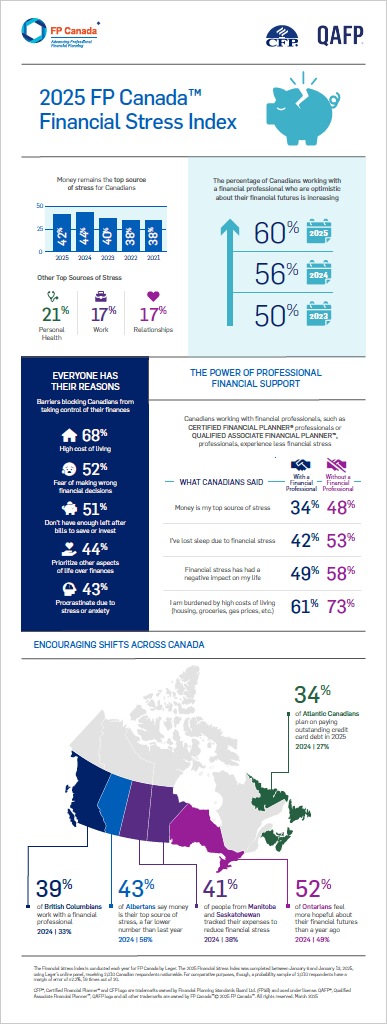
Many Canadians are struggling with conflicting financial priorities. How do you balance your current needs with the life you want for the future?
Many individuals grapple with the competing demands of saving for retirement, funding their children's education, and enjoying a well-deserved vacation.
Of course, the challenge lies in effectively dividing resources to address these diverse priorities. How can one strike a balance between current needs and future financial security? Determining what you can afford in the present while safeguarding your long-term interests requires careful consideration. Seeking the guidance of a professional financial planner becomes crucial when you're navigating this balancing act.
How Working With a Professional Financial Planner Can Help
“It’s up to you to decide which priorities are important for your current and future lifestyle,” says Doug Lamb, a CFP® professional with HollisWealth Advisory Services Inc. in Toronto, Ontario. “You might want to go from full-time to part-time work, take two trips a year, or retire at 55.”
“Once you know what you want, a good professional financial planner can paint a picture of the scenarios you’ve created,” he said. “What’s the end result? What are the potential issues? How can you pursue your financial and life goals today so that your money lasts through retirement?”
A CFP professional or QAFP® professional won’t tell you what to do, Lamb notes. But they will help you understand your situation by illustrating the financial reality behind your wants and needs. Then it’s up to you to make the decisions.
“It’s up to you to decide what priorities are important for your current and future lifestyle,” - Doug Lamb, CFP
Make a Plan and Commit to It
When all is said and done, it comes down to the plan, according to Lamb. “You won’t be in a position to tackle conflicting priorities without a financial plan to take everything into account at once,” he said. “Be willing to commit to the process by working with a professional financial planner who will explain your options and help you progress toward all of your goals.”
When you consider your own financial priorities, keep the following things in mind:
Weigh the trade-offs
Know what’s important to you and where you have flexibility. For example, you may feel that a semi-annual vacation is a must for your mental health, but you’re willing to pack a lunch every day.
Don’t wait
Don’t put off taking a good look at your financial priorities. If you need to make changes, it’s better to find out now so you have time to take action.
Clarity is key
Be crystal clear in communicating your goals to your CFP professional or QAFP professional. Ask questions to make sure you’re on the same page about how you’re going to reach them.
Think long term
Live for today, but don’t forget about the future. You don’t want to be financially compromised later in life because of the choices you make now.
Reassess regularly
Revisit your priorities—and your plan—at least once a year to be sure you’re on track.
Stay the course
Commit to your plan and trust that you’re getting closer to the lifestyle you want.
To find a CFP professional or QAFP professional who can help you manage your financial priorities, use our
Find Your Planner tool.

 Find Your Financial Planner